
LPG in New Zealand: 2026 Market Statistics, Growth, and Future Trends
Natural gas is at critical levels in New Zealand with production declining rapidly [1]. The worry is spreading, leading to many households and businesses feeling uncertain about their energy needs in the future.
Energy security has become an everyday issue in homes, farms, businesses, and commercial establishments. But despite these changes, the LPG market continues to remain strong. There is an increased demand for it especially as the government is switching to lower-emission energy solutions.
ELGAS is helping New Zealand consumers transition to more dependable and flexible LPG energy. We are capable of providing nationwide service, a practical solution to decarbonisation without affecting performance or supply reliability.
Let us examine the current situation of LPG supply in NZ and explore the trends affecting consumer needs and future demands.
The Current State of the NZ LPG Market (Supply vs. Demand)
Domestic gas production has significantly declined as natural gas reserves are fast becoming empty. Because of these, the demand for LPG continues to grow across sectors.
Declining Natural Gas Reserves Impacting The Market
Piped natural gas reserves are quickly drying up. According to the Ministry of Business, Innovation, and Employment (MBIE), reserves fell by 23%, reaching historic lows of around 731 petajoules (PJ) [1]. At this point, power-hungry sectors are starting to feel the pressure.
LPG is partially produced as a byproduct of natural gas extraction, thus, a lower gas output can directly affect LPG supply. With domestic production tight, energy providers are now forced to adapt quickly to ensure reliable supply for all sectors.
Indigenous LPG Production Has Fallen Since 2016
New Zealand’s LPG power supply has dropped by around 44.5% since 2016 as upstream gas extraction slowed [2]. But to be clear, this decline does not mean LPG will soon become unavailable but reflects a change where the main supply is coming from.
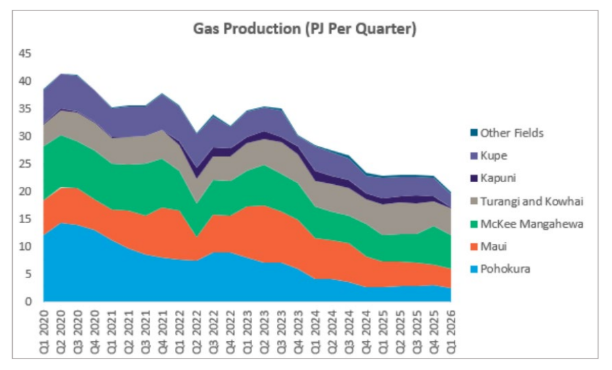
Source: [2]
Indigenous gas supply is also estimated to halve in the next decade, from 112 PJ in 2025, to about 52 PJ in 2035. A total decline of 60 PJ,
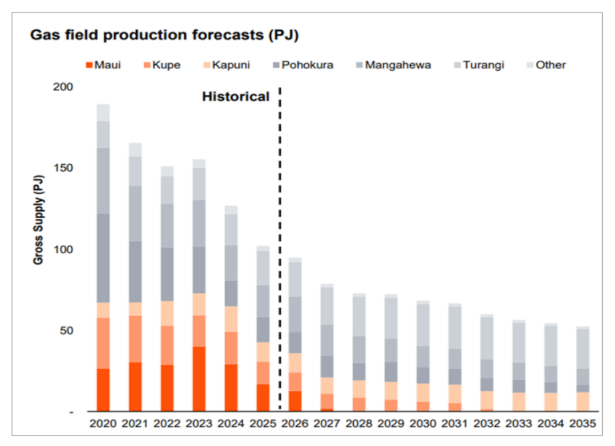
Source: [2]
Reliable suppliers such as ELGAS support international import channels to ensure consumers continue to have reliable fuel with no disruptions even when demand is high.
LPG Demand Continues to Grow Across The Country
LPG demand is rising despite lower domestic production. The latest data shows increased consumption by nearly 15% in the past years, averaging more than 6.28 thousand barrels daily [3].
Homes and businesses consider LPG as a practical and flexible source of fuel, leading to an increasing demand. It’s reliable, portable, and allows independence. People living in critical areas need reliable LPG as an alternative fuel infrastructure is no longer available.
Rising Electricity Prices Reinforce the Need for LPG
Recent dry years, including the 2024 and 2025 periods, have placed extreme pressure on the country’s electricity market. Reduced hydro generation contributed to wholesale electricity spikes, increasing operating costs for many commercial and industrial consumers [4].
These events reinforced the importance of having a reliable backup and off-grid fuels such as LPG. Commercial LPG solutions offer energy security during instability, preventing costly downtime, interruptions, and shutdowns.
Why LPG Consumption is Growing in New Zealand
More homes and businesses are switching to LPG because it’s a reliable and flexible fuel source. It also offers long-term security, especially for people who live off the grid.
Energy Security in Dry Years
New Zealand’s electricity supply relies mostly on hydro generation, which is extremely vulnerable during periods of drought when lake levels fall, and the power supply falls. Recently, these conditions have led to wholesale electricity price spikes, leading to uncertainty for both residential and commercial users.
LPG offers energy security all year long. It can be stored safely on-site as a stable energy source that continues to operate even when grid pressures increase. For most Kiwi businesses, LPG’s reliability has helped them maintain daily operations without a single disruption.
Commercial Businesses Are Switching to LPG
As natural reserves continue to decline, commercial and industrial users are reassessing their fuel strategies to ensure long-term operations. The many concerns around pipeline supply restrictions and possible closure of some natural gas infrastructure are increasing the shift of many businesses to LPG.
Industries such as manufacturing, hospitality, food processing, and agriculture use LPG for heat and daily operations. LPG systems may be integrated with existing heating and cooking equipment; thus, transitions are practical and cost-effective with lower operational risks.
Decentralised Power
Another major factor behind the growth of LPG usage is the increasing demand for decentralised energy solutions in businesses and rural communities. LPG gives these consumers the ability to store fuel on-site, reducing their dependence on the national supply.
And compared to electricity, LPG continues to be accessible even during severe weather, blackouts, or network outages. Having this level of independence allows homes, farms, and commercial establishments to have better control over their daily operations, especially during periods of high demand.
The Green Shift: The Rise of Renewable LPG (rLPG)
As New Zealand moves toward lower-emission energy sources, renewable LPG is helping secure homes and businesses without any major changes to their existing systems.
What is Renewable LPG?
Renewable LPG or rLPG is a low-carbon alternative to conventional LPG. It is the future of gas, made from biological materials and waste-based feedstocks. Despite its source, it is chemically identical to regular LPG, capable of delivering the same reliable performance for cooking, heating, hot water, and commercial use.
Because rLPG works like conventional LPG, customers can continue to use their appliances and heating systems that they rely on every day. rLPG is the most practical solution to decarbonisation for homes and businesses that want to reduce their emissions without sacrificing convenience or efficiency.
Existing LPG Systems Are Already rLPG-Ready
Consumers may not know it, but their existing appliances and equipment are already rLPG ready, which means they don’t need an upgrade or conversions. Existing LPG stoves, heaters, hot water systems, and commercial equipment are already ready for rLPG.
This also applies to industry infrastructure. ELGAS cylinders, storage systems, pipelines, and delivery vehicles are more than capable of handling rLPG. There’s no need for any modifications, allowing consumers to transition to renewable energy in the future.
The Industry’s Long-Term Renewable Targets
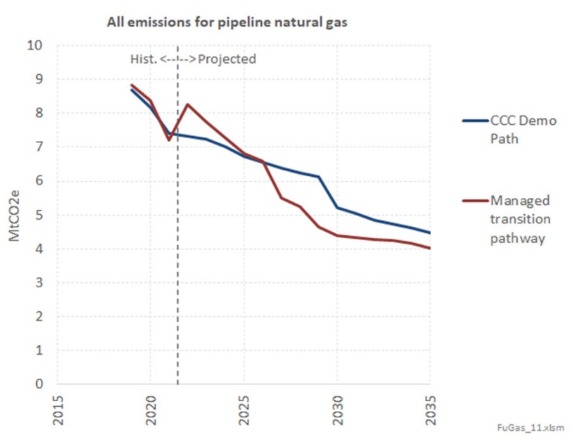
Source:[5]
The New Zealand LPG industry is actively supporting the broader decarbonisation goals through initiatives such as “Future Sure.” Current industry targets are aiming for renewable LPG to make up 20% of the market by 2036 and around 70% by 2050 [5]. These targets show that LPG is becoming a lower-carbon fuel source that will continue to support Kiwi homes, farms, and businesses in the future.
Our Commitment to Energy Reliability
ELGAS is critical in ensuring that the LPG supply in New Zealand remains stable, secure, and reliable. Our strong logistics network, large-scale storage capacity, and established international import partnerships allow us to balance supply and demand across urban and regional markets.
Whether you’re a small cafe in Wellington or a large industrial facility in Canterbury, you can rely on our consistent delivery and prompt service. In 2026 and beyond, ELGAS continues to strengthen its infrastructure and sourcing strategy, ensuring a continuous commercial and residential LPG supply, especially during market volatility or domestic production declines.
Frequently Asked Questions
Is LPG being phased out in New Zealand?
No. LPG is not being phased out.
The government’s Emissions Reduction Plan supports a Gas Transition Pathway with the industry actively transitioning to rLPG to reduce emissions.
Is there an LPG shortage in New Zealand?
No.
While domestic natural gas production has declined, LPG demand remains supported by strong international import supply chains managed by providers such as ELGAS NZ.
Will I need to buy new appliances for Renewable LPG?
No.
Renewable LPG is a “drop-in” fuel source that is identical to regular LPG.
Thus, your current cylinders, pipework, and gas appliances won’t need any modifications.
References:
[1] Ministry of Business, Innovation & Employment – Gas reserves decline to lowest level on record
[2] Gas Industry – Quarterly Report
[3] Global Economy – New Zealand: LPG consumption
[4] Ministry of Business, Innovation & Employment – Electricity
[5] Gas Industry – Gas Transition Plan

Eric has served on multiple committees for the World LPG Association (WLPGA), contributing to important discussions and advancements within the global LPG sector. He has presented at WLPGA Annual Conferences, sharing his expertise as a speaker, panellist, and panel chair.
- Can Gas Tanks Explode? Gas Bottle – Gas Cylinder Explosion - August 5, 2026
- What Size Hot Water Cylinder Do I Need – NZ - August 5, 2026
- Can You Leave a Gas Bottle in the Sun - July 29, 2026